
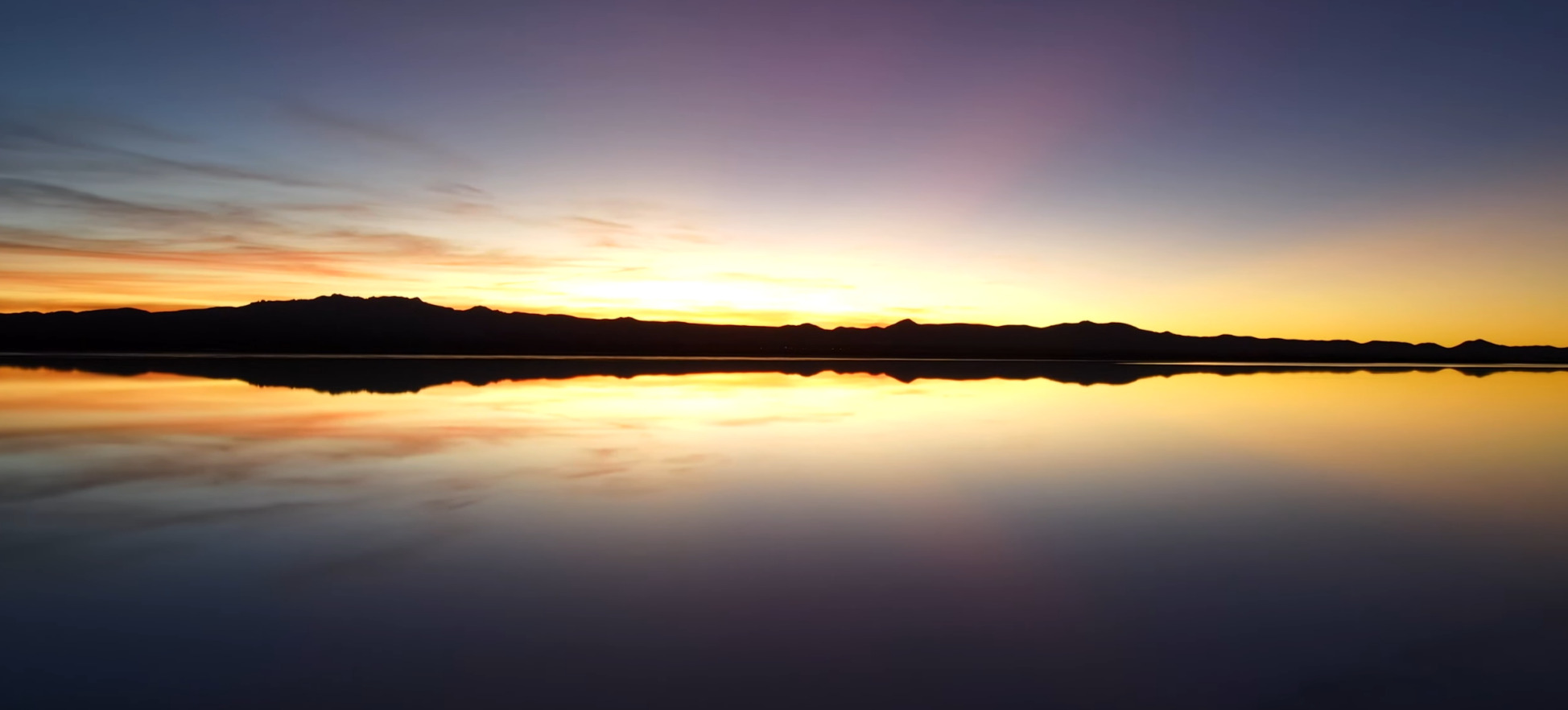
Beyond the White Horizon: The Ultimate Guide to Uyuni Sunset & Stargazing Tours
The Salar de Uyuni is famous for being weird. It’s one of those places that doesn’t feel like Earth. During the day, it’s basically an assault on your retinas—a blinding white expanse where if you forget your sunglasses, you aren’t just uncomfortable, you’re doing actual damage to your eyes. It’s aggressive. It’s a playground for goofy photos and driving fast in a jeep, sure. But the second the clock hits 16:30, the whole vibe on the Altiplano shifts.
The Sunset & Stargazing thing isn’t just “part 2” of a day tour. It’s a completely different animal. When the sun starts dropping toward those distant volcanic peaks, the Salar stops being a tourist attraction and starts feeling spiritual. The aggressive white turns into soft pastels. The wind, which usually slaps you in the face all afternoon, often just stops.
If you care about seeing something real, this is when the trip switches from “looking at stuff” to actually feeling it. It shuts people up. In this guide, I’m going to break down exactly what happens at sunset when you’re 3,650 meters above sea level, why the light here is unlike anything else you’ll ever see, and how to make sure you’re actually watching it instead of driving back to a hotel.
The Physics of Light at 12,000 Feet
To understand why photographers freak out about Uyuni, you have to look at the physics. You are standing on a massive plateau, nearly 12,000 feet up in the air.
1. Atmospheric Clarity and Color Saturation
The air up here is thin. There’s less of it between you and the sun. More importantly, there’s almost zero junk in the sky—no smog, no city dust, practically no humidity. In most places, all that particulate matter scatters light and muddies the colors. In Uyuni, the air is crisp. It’s dry. This creates a purity of light that makes colors look fake. Violets are deeper, oranges are on fire, and the gradients in the sky are flawless. It’s high-definition reality.
2. The Belt of Venus
You’ll see this weird thing called the “Belt of Venus.” It’s an anti-twilight arch. As the sun dips in the west, spin around and look east. You’ll see a pinkish glow separating the dark blue of the Earth’s shadow coming up from the horizon and the lighter blue of the sky. On the flat white canvas of the salt, this effect gets magnified. You’re basically standing inside a 360-degree rainbow.
The Two Faces of Sunset: Seasonality Matters
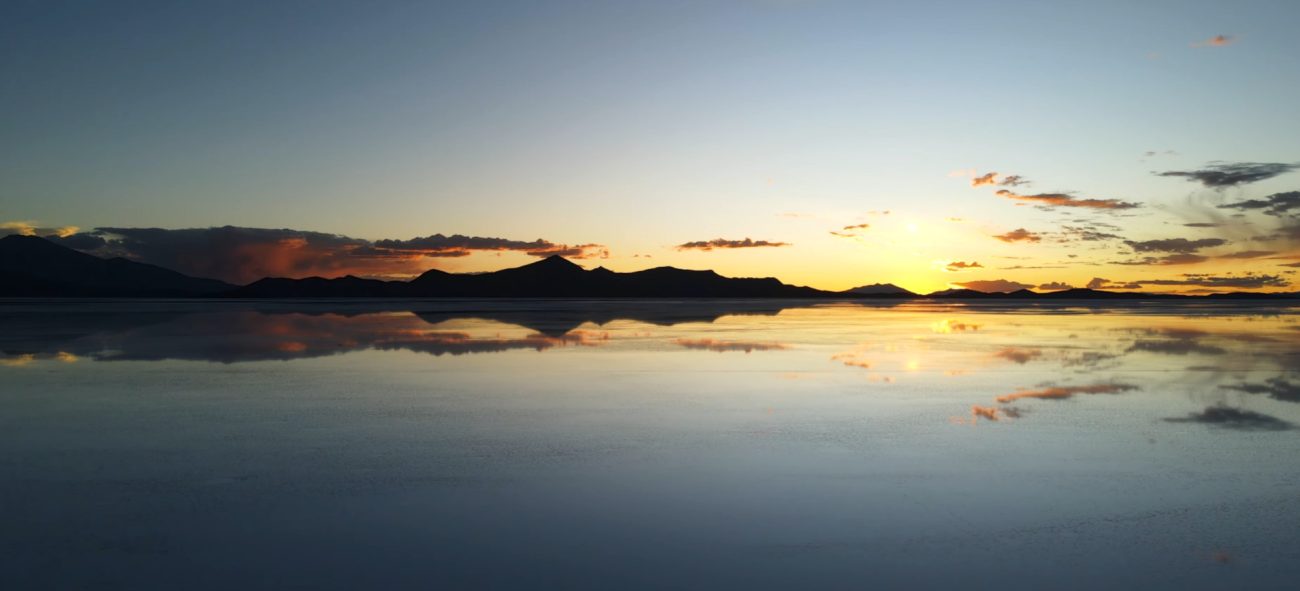
Here is where people get confused. The “Sunset Tour” is two completely different experiences depending on when you go. Both are killer, but they look nothing alike. You need to align your dates with what you actually want to see—check out the guide on the best time to visit Uyuni for the full breakdown.
The Dry Season (May to November): The Geometric Abstract
In the Andean winter, the salt flat is a hard, crunchy crust. Moisture evaporates, and the surface cracks into millions of perfect hexagonal tiles that go on forever.
A sunset now is all about texture. Shadows. Minimalism. As the sun gets low, the ridges of those salt hexagons cast long, dramatic shadows across the floor. The light shifts from blinding white to gold, then soft pink, and finally a cold, deep blue. This is for people who like sharp contrasts and want to drive deep into the Salar to see islands like Incahuasi without getting their feet wet.
The Rainy Season (December to April): The Infinite Mirror
This is the shot. The one you saw on Instagram. When the summer rains hit, a thin layer of water—maybe a few centimeters—sits on top of the hard salt.
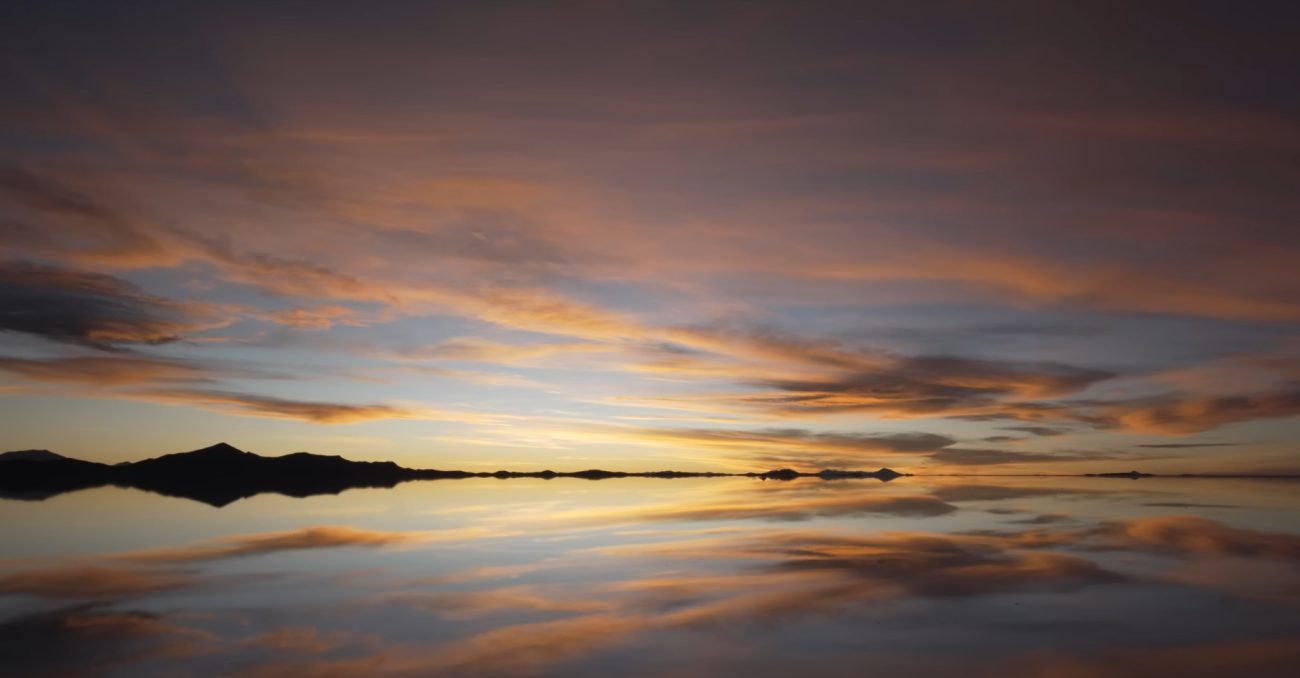
During a sunset in the rainy season, the horizon just… vanishes. The sky reflects perfectly on the ground. Up is down. You aren’t standing on earth anymore; you’re floating in the clouds. When the sun turns the sky red, you are trapped inside a sphere of color. It’s disorienting. It gives you vertigo. It’s magic.
Pro Tip: The “Mirror Effect” is tricky. Too much rain? The water is too deep, driving is dangerous, and tours get cancelled. Too much wind? Ripples break the reflection. Our drivers know the specific micro-spots where the water is glass. Trust them.
The Experience: What to Expect on the Tour
A private sunset tour is built to maximize the feels. Unlike the shared day tours, which run on a strict “go here, take photo, leave” schedule, the sunset tour is about sitting still.
The Setup
Your driver drives you to the middle of nowhere. Far away from the main tracks and the other jeep convoys. If you booked through our luxury tours from La Paz, you might already be at a salt hotel on the edge, which makes this easy. If not, you head out from Uyuni town in the late afternoon.
The Ritual
As the light starts to turn, your guide sets up a small table right on the salt (or in the water—bring boots). It’s tradition to do a “sunset toast”—usually wine, maybe some coca tea or hot chocolate because, frankly, it’s freezing. Standing there, drink in hand, watching the sun die? It’s usually the highlight of the whole trip.
Photography Strategy: Capturing the Golden Hour
You don’t need a $5,000 camera to get good shots here, but you do need to move fast. The light doesn’t wait for you.
- Silhouettes: Put your friend between your camera and the sun. The high contrast makes them a sharp black cutout against the color. Great for couples or goofy group poses.
- The Blue Hour: Don’t leave when the sun goes down. Seriously. The 20 minutes after sunset (civil twilight) turn the whole world electric blue. This is the moodiest time for wide shots before the stars come out.
Why This is an “Add-on” (and how to book it)
Let’s be clear: sunset and stargazing are almost never included in standard day tours. Regular tours drag you back to town by 5 or 6 PM so the driver can go home. If you want to see the Salar at night, you need a specific vehicle and a driver crazy enough to navigate a featureless void in the dark.
If you are booking our standard 3-Day Classic Tour, tell them you want the sunset module added. If you’re rushing through, you can even combine this with our 1-Day Express trips—stretch the adventure into the night before catching your bus or flight. It’s worth the extra cash.
Once the “Blue Hour” finally dies and the world goes black, the Salar de Uyuni does this second transformation trick. It’s wild. The absolute lack of light pollution, mixed with the fact that you are gasping for air at 3,650 meters, turns the sky into a dense, heavy canopy of stars. If you’re a city person used to spotting maybe three bright dots on a good night, the density of the Milky Way here is going to shock you.
This isn’t “stargazing.” It’s astronomy in 4K. The Incas didn’t just connect the bright dots; they looked at the black spaces between them—the “Dark Cloud Constellations.” They saw shapes in the void, like the Llama and the Toad, living right there inside the Great Rift of the Milky Way. This section breaks down the nocturnal magic of the Salar and, honestly, how to survive the brutal cold that comes with it.
The Celestial Calendar: Timing the Galaxy
Just like the sunset, the star show runs on nature’s clock. If you want the goods, you have to track the moon and the season. Don’t just show up and hope for the best.
The Moon Phase Factor
- New Moon (The Good Stuff): If your main goal is seeing the Milky Way look like a rip in the sky, you have to book during the New Moon. Without the moon’s glare, it is pitch black. Scary dark. The galactic core shines so hard it actually casts shadows on the ground.
- Full Moon (The “Daylight” Night): A full moon on a white salt flat is eerie. It reflects so much light you can read a book without a flashlight. The stars get washed out, sure, but the landscape glows in this weird, metallic silver light. It’s beautiful, but if you brought a telescope, you’ll be bummed.
The Seasonal Sky
- Dry Season (Winter): Arguably the best time for pure astronomy. The Galactic Core is high and bright in the Southern Hemisphere winter. The air is dry. Zero haze.
- Rainy Season (Summer): If you get lucky—and I mean really lucky—with a calm night and water on the ground, you get the “Double Cosmos.” The stars reflect at your feet. Walking on the Salar at night feels like spacewalking. It’s a head trip.
Surviving the Chill: The Reality of Night at Altitude
I cannot stress this enough: it is freezing. Once the sun drops, the heat vanishes. In winter (June-August), temps crash to -15°C or -20°C. In summer, it’s milder, but if your feet get wet in the reflection water, you are going to be miserable.
Hypothermia is a real thing here. Standard jeans and a hoodie? Useless. You need thermal layers, a windbreaker, heavy gloves, and a wool hat. If you are doing the “mirror” tour, water-resistant footwear is non-negotiable.
Preparation Guide: Before you head out into the dark, check our full Uyuni Packing List. It covers the specific layering system you need so you don’t end up shivering in the jeep while everyone else is enjoying the view.
Astrophotography 101: Capturing the Infinite
Everyone wants that shot. You know the one—standing under the arch of the Milky Way. Our guides can help stage it, but the gear is on you.
You cannot shoot this with an iPhone “night mode” while your hand is shaking from the cold. You need:
- A Tripod: Mandatory. The shutter needs to be open for 15-25 seconds.
- Manual Settings: A camera that can handle high ISO (3200-6400) and a wide aperture (f/2.8 is the sweet spot).
- Patience: You will be standing still. In the freezing cold. For a long time.
How to Upgrade Your Experience
The standard “Sunset + Stargazing” gig usually means driving out, freezing for 2 hours, and driving back. But there are ways to make it less painful.
The VIP Option: Sleep Under the Salt
Instead of driving back to a cold hostel in Uyuni town at midnight, book a stay at one of the luxury salt hotels on the edge (like Palacio de Sal). They have private terraces where you can stare at the stars with a glass of wine, then step inside to a fireplace. It changes the whole vibe.
If comfort is your thing, check out our Luxury Uyuni Tours from La Paz. We include these hotels by default because, honestly, they’re worth it.
The Cross-Border Adventure
A lot of people use Uyuni as a backdoor to Chile. If you are obsessed with the night sky, the Atacama Desert (where the tour ends) is literally the world’s astronomy capital. You can combine the wild Uyuni stars with the high-tech telescopes of San Pedro.
Check the logistics here: San Pedro de Atacama to Uyuni Tours.
Conclusion: The Ultimate Memory
The Sunset and Stargazing tour isn’t just a photo op. It’s humbling. Standing on that vast, silent mirror, with galaxies above you and below you, is a moment where you feel very small and very connected to everything.
Ready to figure out the logistics?
After your night out, you need a plan. Whether you’re heading back to civilization or pushing deeper into Bolivia, we can handle the transport.
- Next Stop Sucre/Potosi: Go see the colonial history with our private transfers to Potosi and Sucre.
- Back to La Paz: Head back to the capital for your flight home via our flight-inclusive packages.


