
When to Visit Salar de Uyuni? A Complete Guide to Seasons and Weather
Planning a trip to the Salar de Uyuni is… weird. It’s not like planning a vacation to literally anywhere else. usually, when travelers ask “When is the best time to visit?”, they’re hunting for the warmest weather or the cheapest flights.
But when you’re talking about the Bolivian Salt Flats, that question hits different. You aren’t just picking a date on a calendar. You are choosing between two completely different planets.
Depending on the month you show up, you’re going to get one of two things. You’ll either see the World’s Largest Mirror—that surreal, water-covered dreamscape where the sky and earth just sort of melt into each other—or you’ll get the World’s Largest Salt Desert. That’s the classic, blindingly white expanse of geometric hexagons where you can take those goofy perspective photos. Both are insane. Both are beautiful. But here’s the catch: you usually can’t have both.
Let’s break down the pros, the cons, and the messy logistical realities of each season so you can figure out which version of the Salar is the one you actually want.
The Great Divide: Wet Season vs. Dry Season
The Salar de Uyuni sits on the Altiplano at 3,650 meters. The climate up here is extreme. It’s binary. Forget about “spring” or “autumn.” Those don’t exist here. There is simply the time when it rains, and the time when it dries out.
- The Rainy Season (December to April): The time of the “Mirror Effect.”
- The Dry Season (May to November): The time of “Perspective Photography” and Island exploration.
To help you make the right call, we need to look at these seasons not just by what the weather app says, but by how it actually feels to be there.
The Rainy Season: Chasing the Infinite Mirror (December – April)
For photographers and Instagram addicts, this is the Holy Grail. When the summer rains hit the Andes, water spills onto the salt flat. Because the salt crust is rock-hard and impermeable, the water doesn’t drain. It just sits there. A thin layer—maybe a few millimeters, maybe half a meter deep.
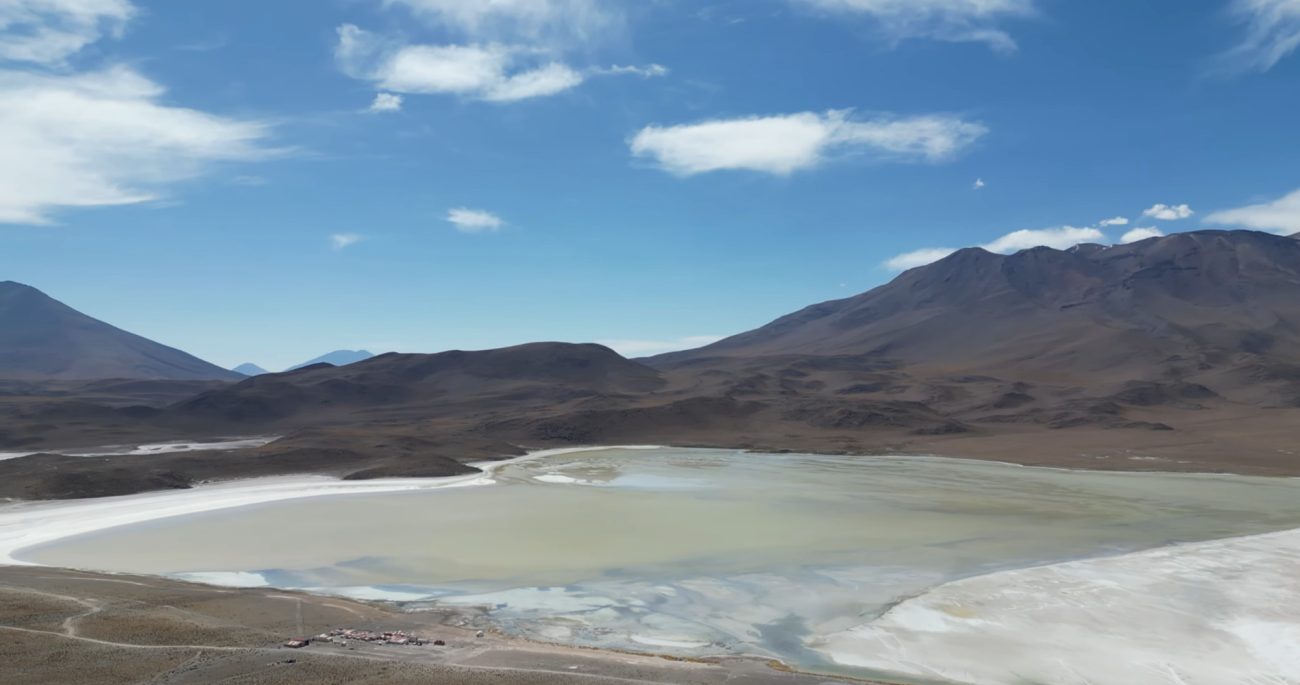
When the wind dies down, that water turns the landscape into a flawless mirror. The horizon line? Gone. Clouds look like they’re floating under your feet. It’s a sensation of pure vertigo. It’s awe. It’s the kind of thing that makes you forget your name for a second.
The Pros: Why Choose the Rainy Season?
- The Reflection: I mean, this is the main reason. The visual impact is emotional. It feels like walking in the sky.
- Epic Sunsets: As we mentioned in our guide to Sunset & Stargazing Tours, the wet season puts on a show. The colors reflect 360 degrees around you. You are inside the sunset.
- Warmer Nights: “Warmer” is a relative term on the Altiplano, but the summer months (Dec-Feb) are way less brutal than the winter. Nighttime temps hover around freezing (0°C to -5°C), rather than the bone-crushing -20°C you get in July.
The Cons: The Logistical Nightmare
The beauty comes with a price tag. Salt water is nasty stuff—it’s highly corrosive and destroys vehicles. Drivers hate it. This leads to some serious restrictions.
- No Islands: This is the big trade-off. During the rainy season, the water gets too deep for the jeeps to reach the famous Incahuasi Island (Fish Island). Those giant cacti you saw in the brochure? You’ll likely miss them. If the water is high, the islands are off-limits.
- Slower Travel: Driving through brine requires extreme caution. Vehicles crawl to avoid splashing salt into the engines and electronics.
- Weather Risk: It is, after all, the rainy season. You might get the perfect mirror. Or you might get gray, overcast skies where the reflection is dull. You might get a storm that blocks the view entirely. It’s a roll of the dice.
Our Recommendation: If your heart is set on the Mirror Effect, you have to be flexible. Water levels change daily. Often, a full 3-day crossing is a headache in these conditions. A lot of travelers in this season just book our 1-Day Express Tour specifically to hunt for the water, get the photo, and get out without risking getting stuck in the mud.
The Dry Season: Geometry and Exploration (May – November)
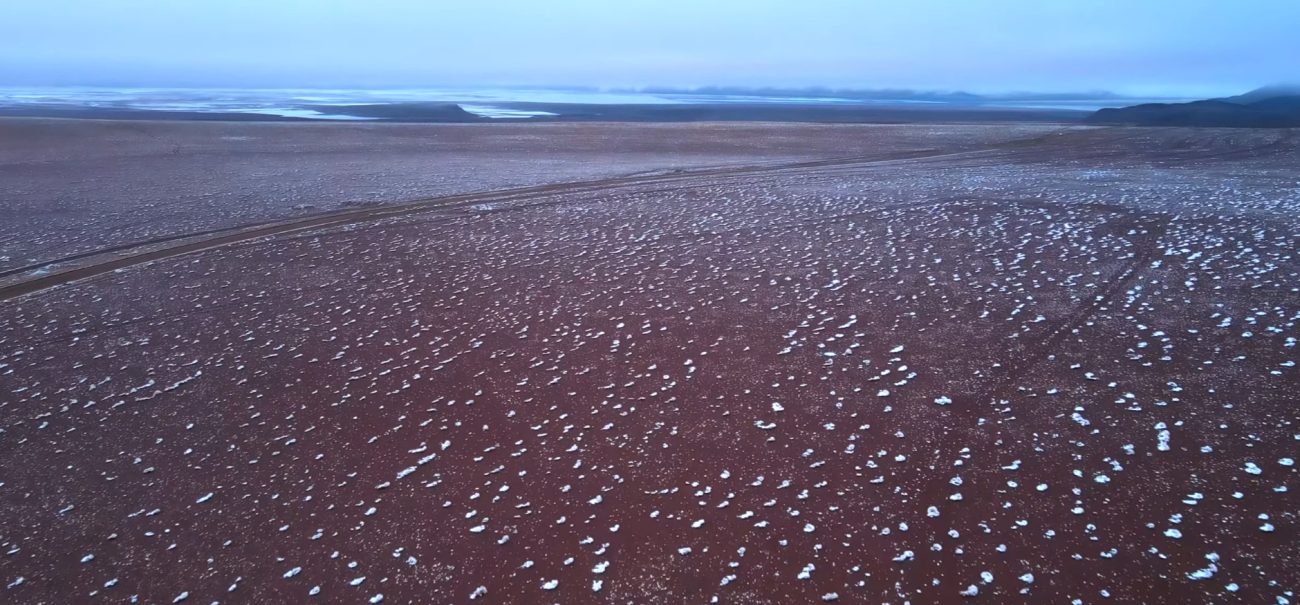
This is the classic Uyuni experience. From May onwards, the tap turns off. The intense high-altitude sun bakes the water away. The salt dries into a hard, white crust. As it dries, it cracks into millions of pentagons and hexagons, creating that crazy geometric pattern that stretches to the edge of the world.
For purists and adventure junkies, this is the “true” season for an expedition.
The Pros: Why Choose the Dry Season?
- Perspective Photography: You know those photos where a guy is fighting a toy dinosaur, or walking out of a Pringles can? You can only do that now. To sell the optical illusion (forced perspective), you need the ground to be perfectly white and featureless. A reflection ruins the trick.
- Full Access: In the dry season, the Salar is a highway. We can drive anywhere. That means we hit Incahuasi Island, hike to the top among the 1,000-year-old cacti, and stare at the white sea from above. We can hit the Tunupa Volcano and the mummies of Coquesa. Nothing is off-limits.
- Clear Skies: Winter on the Altiplano means crystal clear blue skies basically every day. Rain is non-existent. Your plans won’t get wrecked by a storm.
- Astronomy: The dry air and zero clouds make the nights spectacular for stargazing. The Milky Way looks like it’s been drawn in high definition.
The Cons: The Chill Factor
The main drawback? The cold. June, July, and August are brutal.
- Freezing Nights: You need to be ready to freeze. Temps at night regularly drop to -15°C or -20°C. If you’re staying in a basic refuge with no heat, you’re going to feel it.
- No Mirror: You won’t see the reflection. The ground is opaque, crunchy white salt.
Our Recommendation: If you want to see the “whole” Salar—islands, volcano, geometry—this is the time. It’s perfect for our comprehensive 3-Day Classic Route. Just bring thermals. Seriously.
The “Shoulder Season”: The Gambler’s Choice
Can you cheat the system? Can you get the dry hexagons and the mirror effect in one trip?
Technically, yeah. But it requires luck. The transition periods—late April/early May and early December—are the shoulder seasons.
- Late April: The rains have stopped, but the water hasn’t totally evaporated. You might find the center of the Salar is dry (so you can hit Incahuasi Island), but the edges near the hotels still have a few inches of water for reflections.
- Early December: The first rains are starting. You might get lucky with a localized storm that creates a mirror in one spot while the rest stays dry.
But let’s be real: this is a gamble. In a dry year, April might be totally bone-dry. In a wet year, December might be flooded early. If you pick these dates, you are betting against nature.
Summary of Visual Differences
To help you visualize the choice, compare the aesthetic vibes:
| Feature | Dry Season (May-Nov) | Rainy Season (Dec-Apr) |
|---|---|---|
| Ground Texture | White Hexagons (Salt Crust) | Smooth Water (Mirror) |
| Photography Style | Fun Perspective / Optical Illusions | Artistic Reflections / Symmetry |
| Horizon Line | Visible (Mountains in distance) | Invisible (Sky meets Earth) |
| Colors | Stark White & Blue Sky | Saturated, Multi-colored (at sunset) |
We already talked about the visual split of the Salar de Uyuni—the mirror versus the hexagons. But let’s be real: your trip to Southwest Bolivia isn’t just about standing on salt. Most itineraries, especially those 3-day expeditions everyone books, drag you deep into the Eduardo Avaroa Andean Fauna National Reserve.
That place is a different beast entirely. It’s full of colored lagoons, geysers, and volcanoes, and it operates on its own schedule. So, let’s break down the year month-by-month, look at how the weather messes with the wildlife (especially the flamingos), and figure out how you can survive without freezing to death.
Month-by-Month Breakdown
Here is what the calendar actually looks like on the Bolivian high plateau. Pick your poison.
January – March (High Rainy Season)
- The Vibe: Wet. Dramatic. Colorful.
- Salt Flat: Flooded. The Mirror Effect is peaking. Access to Incahuasi Island? Usually blocked. Don’t count on it.
- Weather: Expect thunderstorms in the afternoon. Temps are “mild” for this place—rarely dropping below -5°C at night.
- Wildlife: Flamingo party. The lagoons are packed with birds breeding.
- Best For: People obsessed with reflection photos, astrophotographers hunting for “stars in the water,” and bird nerds.
April – May (The Transition)
- The Vibe: The drying out phase.
- Salt Flat: A mix. You might get dry patches near the islands and water near the edges. It’s the “best of both worlds” season, theoretically. Nothing is guaranteed though.
- Weather: The rain stops. Sky clears up. The temperature starts its nosedive into winter.
- Best For: Gamblers who want to hike Incahuasi Island but are praying for a puddle to get a reflection shot.
June – August (High Dry Season / Winter)
- The Vibe: Crystal clear and bone-chillingly cold.
- Salt Flat: Bone dry. The white hexagons are perfect. You can drive anywhere.
- Weather: This is winter. The sky is blue every single day (great for photos), but the nights are brutal. -15°C to -20°C. It hurts.
- Logistics: Snow happens in the mountains near Laguna Colorada. Sometimes it blocks the pass to Chile (Hito Cajon). If you’re planning a transfer to San Pedro de Atacama, watch the weather.
- Best For: Perspective photography, hiking islands, and stargazing (the Milky Way core is right there).
September – November (Spring)
- The Vibe: Warmer but windy.
- Salt Flat: Dry and hard.
- Weather: Temps go up, so you won’t die at night. But the wind picks up. Dust storms are a thing south of the Salt Flat.
- Best For: People who want the dry salt experience but refuse to deal with the July freeze.
The Flamingo Factor
Seeing the three types of flamingos (Andean, Chilean, James’s) is a huge part of the 3-day loop. But they don’t just hang around waiting for you.
- Summer (Dec-Apr): Lagoons are full of water and algae. Thousands of flamingos are there. If you want National Geographic shots, go now.
- Winter (Jun-Aug): The lagoons can freeze at night. Flamingos are tough, but a lot of them migrate to warmer spots. You’ll see some, but not the massive flocks you get in summer.
Surviving the Cold: A Strategic Choice
I cannot stress this enough: The Altiplano is hostile. The cold in July isn’t just uncomfortable; it’s dangerous if you’re stupid about it. And “prepared” doesn’t just mean bringing a jacket—it means picking the right tour.
1. The Gear Solution
If you go in winter, your packing list is your lifeline. You need thermals. You need a down jacket. You need windproof pants. We wrote a whole guide on this because people keep showing up in jeans. Read it: What to Wear in Uyuni: The Ultimate Packing List.
2. The Accommodation Solution (The Upsell)
The standard tourist refuges are basically iceboxes. They give you heavy blankets, but the room temperature drops to near freezing. If you go in winter (June-Aug) and you hate suffering, upgrade.
Our Luxury Tours use the actual hotels (like Tayka del Desierto or Mallku Cueva). They have heating. They have electric blankets. They have hot water. In winter, paying extra for a warm room is the best money you will ever spend.
The Verdict: Which Season is For You?
Here is the cheat sheet. Use it.
Choose the Rainy Season (Jan-Mar) if:
- Your Instagram needs the “Mirror Effect.”
- You want to see the sunset reflected on the ground.
- You care more about flamingos than hiking cactus islands.
- You hate the cold.
- Recommended Tour: 1-Day Private Tour (safest bet for finding water) or a flexible 3-day loop.
Choose the Dry Season (Jun-Sep) if:
- You want those funny “perspective” photos with the toy dinosaurs.
- You want to hike Incahuasi Island.
- You want guaranteed blue skies.
- You are crossing into Chile.
- Recommended Tour: 3-Day Classic Private Tour (The full package).
Final Thoughts
There is no “bad” time to go. The place is majestic 365 days a year. The only way to mess it up is to have the wrong expectations—like expecting a mirror in July or thinking you can hike Incahuasi in February.
Align your dates with what you actually want to see, and the Salt Flat will deliver.
Still confused? Contact our team. We can tell you if there’s water on the ground right now.


