
The Complete Guide: How to Get to Uyuni from La Paz, Sucre, and Chile
The Salar de Uyuni is one of the most remote tourist destinations in South America. It is buried in the southwest corner of Bolivia, clinging to the crest of the Andes, far away from anything that looks like a major city. You are 540 kilometers south of La Paz and sitting at an altitude of 3,650 meters.
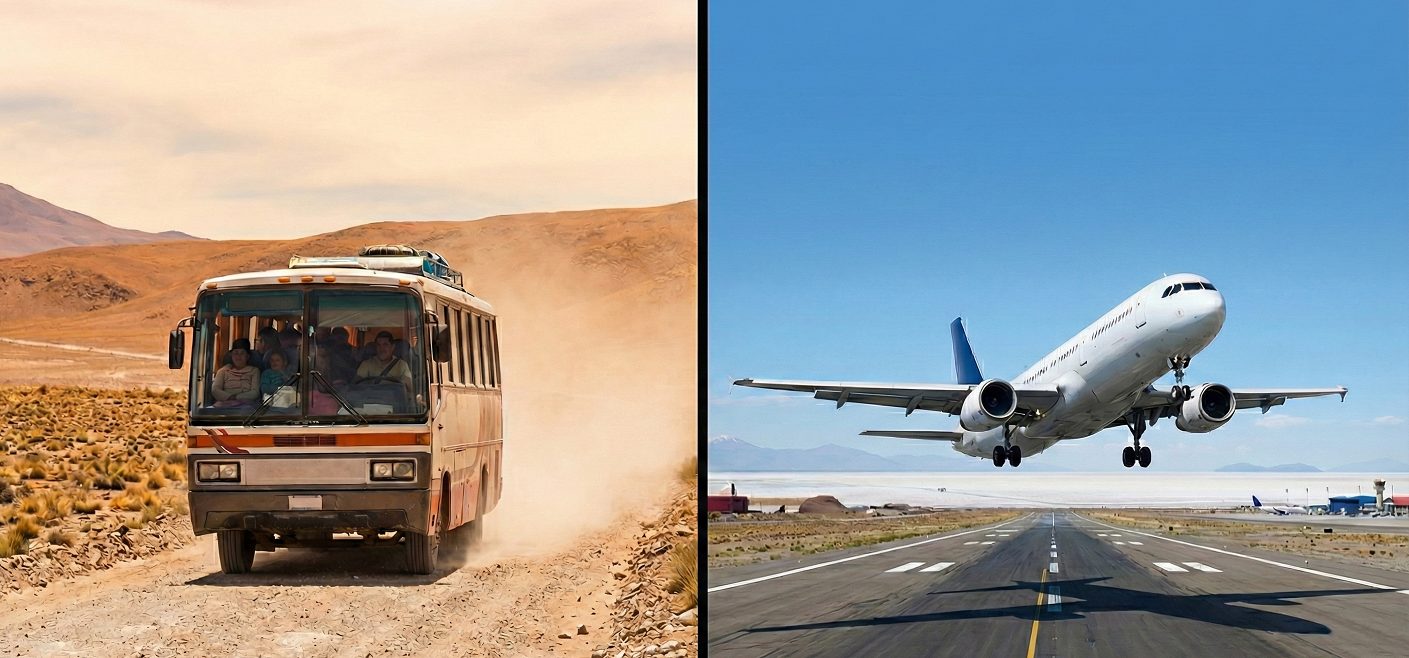
Getting here is often sold as part of the adventure. Or it’s part of the ordeal. Depends on how much pain you can tolerate. Back in the day, the only way to reach the salt flats was a bone-rattling 12-hour nightmare on a dirt road. It was brutal. Today, things are better. You have options ranging from a quick 45-minute flight to the classic overnight tourist bus.
In this guide, I’m going to break down the logistics of getting to the gateway of the Salt Flats based on your budget, your schedule, and how much you enjoy sleeping in a moving vehicle.
Option 1: By Plane (The Fast & Comfortable Way)
Route: La Paz (LPB) to Uyuni (UYU) Duration: 45 minutes Cost: Approx. $80 – $130 USD (One way)
If you value your time—or your sanity—flying is the move. It turns a grueling 10-hour night shift on a bus into a scenic 45-minute hop over the Andes. You look out the window, see the Altiplano, Lake Poopó, the Quinoa fields… and then you land. It’s spectacular.
Airlines and Schedule
Right now, the route is basically owned by BoA (Boliviana de Aviación), the state carrier. They usually run 2 or 3 flights a day:
- Morning Flight: Usually leaves La Paz around 7:40 AM, landing in Uyuni at 8:40 AM. This is the “Golden Flight.” It lands just in time for you to throw your bags in a jeep and start a tour that same morning. Efficient.
- Evening Flight: Usually takes off around 7:00 PM. Solid choice if you want to sleep in a real bed in Uyuni before starting the adventure the next day.
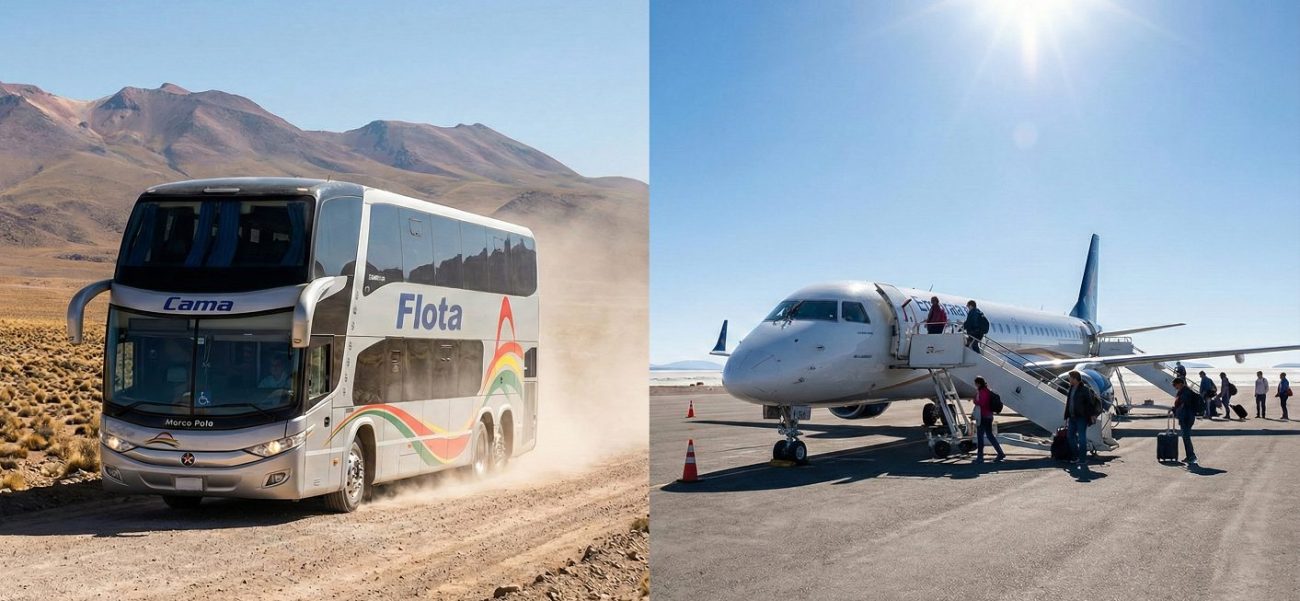
The Airport (Joya Andina)
Uyuni’s airport is tiny but modern. It’s maybe 5 minutes from the town center. Taxis are always waiting outside when a plane lands (cost is roughly 15-20 BOB / $3 USD).
Pro Tip: Flights in Bolivia run on “Bolivian time.” They are prone to delays, especially when the winds pick up. Always check the status. If the stress of coordinating flights and transfers sounds like a headache, maybe look at our Luxury Tour Packages from La Paz. We handle the bookings, the pickups, the logistics. You just show up.
Option 2: The Night Bus (The Backpacker Classic)
Route: La Paz to Uyuni Duration: 9 – 10 hours Cost: $15 – $35 USD
Taking the night bus is a rite of passage for backpackers in South America. It’s the most popular way to get to Uyuni simply because it’s cheap and it saves you the cost of a hotel room. You sleep (or try to) while you move.
Choosing the Right Bus Company
Not all buses are created equal. The road is paved now, which is nice, but it’s still a long haul. Do yourself a favor and pay the extra $10 for a “Tourist Class” bus. Do not take the “Local” bus unless you enjoy suffering.
- Todo Turismo: This is the famous “gringo bus.” They cater to foreigners. You get dinner, heating that actually works, blankets, and an attendant who speaks English. It’s the most reliable option.
- Trans Omar / Panasur: Good local alternatives. They offer “Cama” seats.
The Reality of the “Cama” Seat
Be careful with the wording here.
- Semi-Cama: Reclines about 140 degrees. It’s basically an economy plane seat. Good luck sleeping.
- Cama (Full Cama): Reclines 160-170 degrees. Much wider. Highly recommended if you want to function the next day.
Important Safety & Comfort Warnings
- The Terminal: The La Paz bus terminal is generally safe inside, but it’s chaotic. Keep your eyes on your bags.
- The Arrival Time: This is the worst part. Buses arrive in Uyuni ridiculously early—often between 5:00 AM and 6:00 AM. The town is absolutely freezing at that hour. Most cafes don’t open until 7:00 AM. You will see dozens of shivering tourists wandering the streets like zombies wrapped in blankets.
- Altitude Sickness: The bus climbs over 4,000 meters in the middle of the night. If you aren’t acclimated, you might wake up with a splitting headache.
Planning Tip: If you roll in on the night bus at 6:00 AM, you are going to be wrecked. Jumping straight into a 3-day expedition is tough. A lot of travelers book a 1-Day Private Tour for their first day to take it easy, or just use the day to recover before the big stuff.
Option 3: The Train (For the Nostalgic)
Route: Oruro to Uyuni Duration: ~7 hours Cost: $10 – $20 USD
Guidebooks love to mention the train to Uyuni. But let’s be clear: There is no train from La Paz to Uyuni. The train leaves from the city of Oruro, which is a 4-hour bus ride south of La Paz.
You have to catch a bus from La Paz to Oruro, transfer to the train station, and then take the train south.
- Expreso del Sur: Faster, nicer (Tuesdays and Fridays).
- Wara Wara: Slower (Wednesdays and Sundays).
Is it worth it? Eh. Usually no. Unless you are a hardcore train nerd, the hassle of switching from bus to train in Oruro makes it way less convenient than the direct night bus or the flight. That said, the scenery rolling through the Altiplano is undeniable.
We already covered the standard La Paz routes—the flights, the buses, the trains that aren’t really trains. But a lot of people don’t come from the north. They drift in from the south or the east. If you are coming from Chile or the colonial cities, the game changes. Different logistics, different headaches, different rewards.
Option 4: From San Pedro de Atacama, Chile (The Cross-Border Route)
Route: San Pedro de Atacama -> Hito Cajon Border -> Uyuni Duration: 3 Days (Recommended) or 1 Day (Transfer) Cost: Depends on the tour
This is arguably the most efficient way to handle the Salt Flats if you’re on a multi-country tear. San Pedro de Atacama is the big tourism hub on the Chilean side. Instead of backtracking all the way to La Paz like a rookie, you just cut straight across the Andes into the Eduardo Avaroa Reserve.
The “Transfer-is-the-Tour” Strategy
Here’s the beauty of this route: the commute is the sightseeing. The border crossing at Hito Cajon drops you literally at the foot of the Licancabur Volcano and the Green Lagoon. From there, you just drive north through the reserve. You hit the geysers, the red lagoon, all the good stuff, before finishing at the Salt Flat and Uyuni town.
You have two ways to play this:
- The 3-Day One-Way Tour: You start in San Pedro, spend 3 days getting your mind blown in the highlands, and finish in Uyuni. This is the move.
- The 1-Day Transfer: Technically, yes, you can drive straight through in one day. It takes about 10-12 hours. It’s exhausting. You miss everything. I only recommend this if you are desperately short on time or just hate joy.
Booking Advice: The border is messy. You have immigration paperwork and vehicle swaps—Chilean vans aren’t allowed deep into Bolivia, so you have to jump into Bolivian Land Cruisers in the middle of nowhere. It’s complex to DIY. Just book a specialized San Pedro de Atacama to Uyuni Private Tour and let them handle the stress.
Option 5: From Sucre or Potosí (The Colonial Route)
Route: Sucre -> Potosí -> Uyuni Duration: 7-8 hours (from Sucre), 4 hours (from Potosí) Cost: $10 (Bus) – $150+ (Private Transfer)
If you’re doing the overland bus thing through Bolivia, you’re going to hit Sucre (the pretty capital) and Potosí (the mining beast) eventually. The road connecting these three points is fully paved now. The valley views are actually stunning.
Public Bus
Buses run from the new terminal in Potosí to Uyuni constantly. Sucre is trickier. Direct buses leave at ungodly hours in the morning. A lot of travelers end up having to switch buses in Potosí, which is a hassle.
Private Transfer (Recommended)
The drive from Sucre to Uyuni is long. It winds through the mountains. Public buses are crowded, they overheat, and they smell like diesel. A private transfer turns the slog into a road trip. You can stop at the Pulacayo Mining Center. You can grab lunch in Potosí without dragging your bags around.
If you’re coming from this direction, read our guide on Transfers from Sucre/Potosi to Uyuni to see why paying extra for the car is worth it.
Summary: Which Option is Right for You?
To help you make up your mind, here is the breakdown of the La Paz options again, just for comparison:
| Method | Time | Cost (Approx) | Comfort | Best For… |
|---|---|---|---|---|
| Flight (BoA) | 45 Mins | $80 – $130 | High (5/5) | People who value their time. |
| Tourist Bus | 10 Hours (Overnight) | $30 – $40 | Medium (3/5) | Backpackers. |
| Local Bus | 10-12 Hours | $10 – $15 | Low (1/5) | Masochists. |
Conclusion: The Destination is Worth the Journey
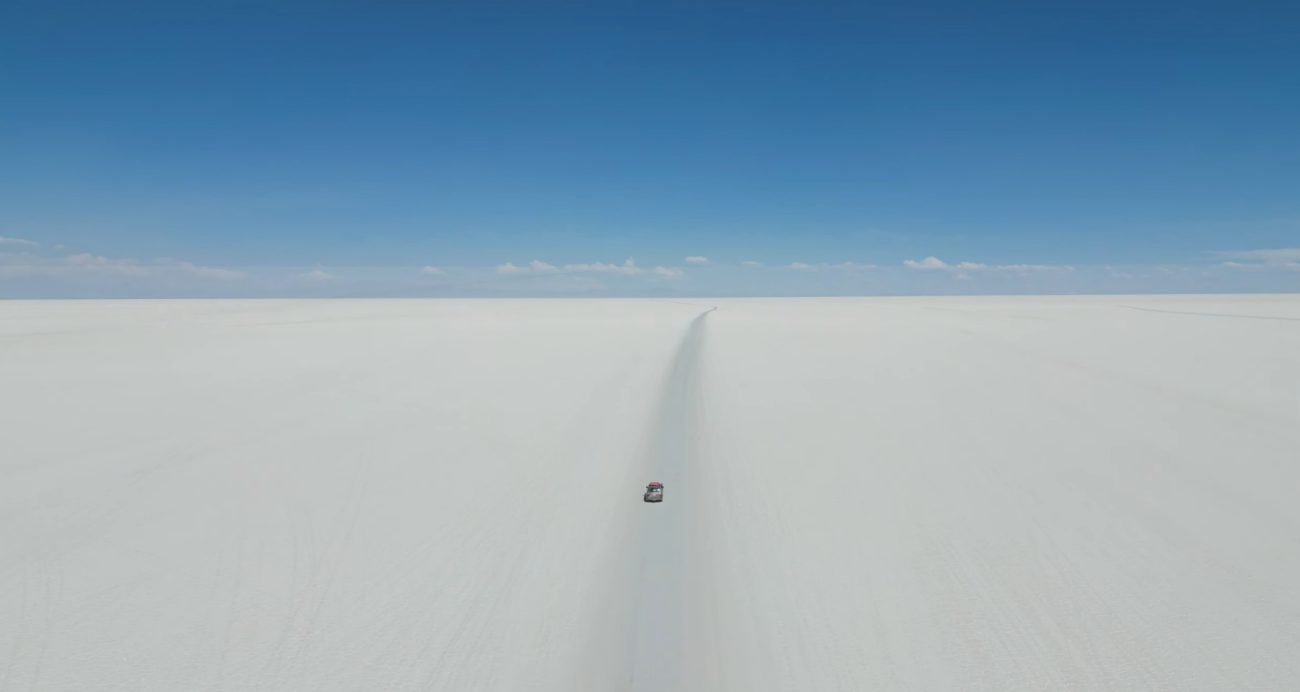
Uyuni is isolated for a reason. If it was easy to get to, it would be ruined. Its remoteness is what keeps it pristine and alien. Whether you take the flight, survive the night bus, or drift in from Chile, the goal is the same: standing on the world’s largest mirror.
Once you get to Uyuni, the logistics of arriving end, and the logistics of surviving the desert begin. That’s where we step in.
Ready to start? Now that you know how to get here, make sure the actual trip doesn’t suck. Check out our most popular itinerary, the Classic 3-Day Private Tour. It takes you from the salt to the lagoons and back without the drama.


